
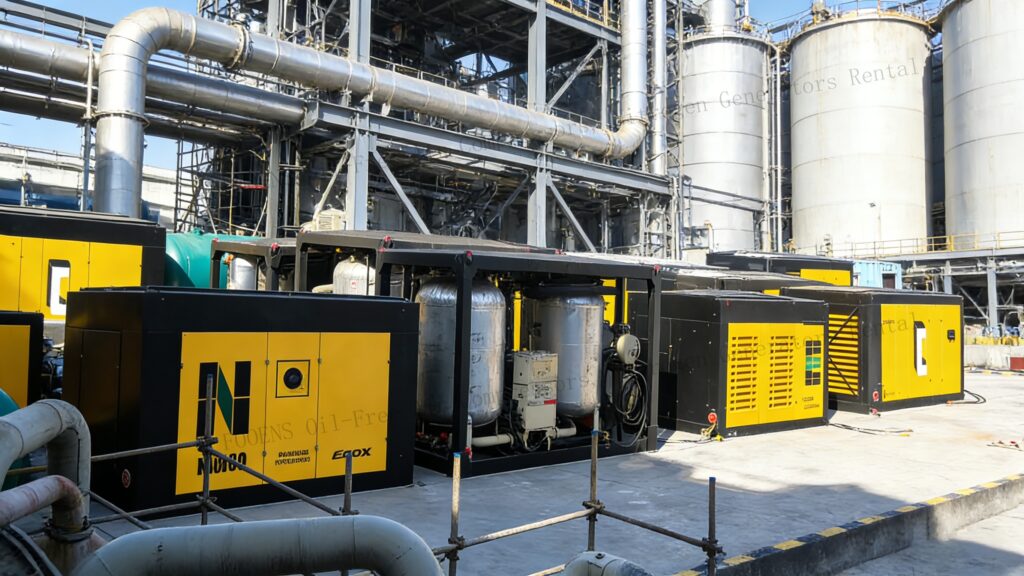
How to select an oil-free air compressor for a nitrogen generator is a key technical question in many industrial projects. The stability of a nitrogen system depends on air quality. Air quality depends on compressor type, air treatment configuration, and operating control. If the selection is not appropriate, nitrogen purity may fluctuate, adsorbent life may shorten, and energy costs may increase.
This article explains how to select an oil-free air compressor from four aspects: technical logic, parameter calculation, rental strategy, and project practice. It also introduces Oil-Free Air Compressor Rental solutions provided by FOOENS.
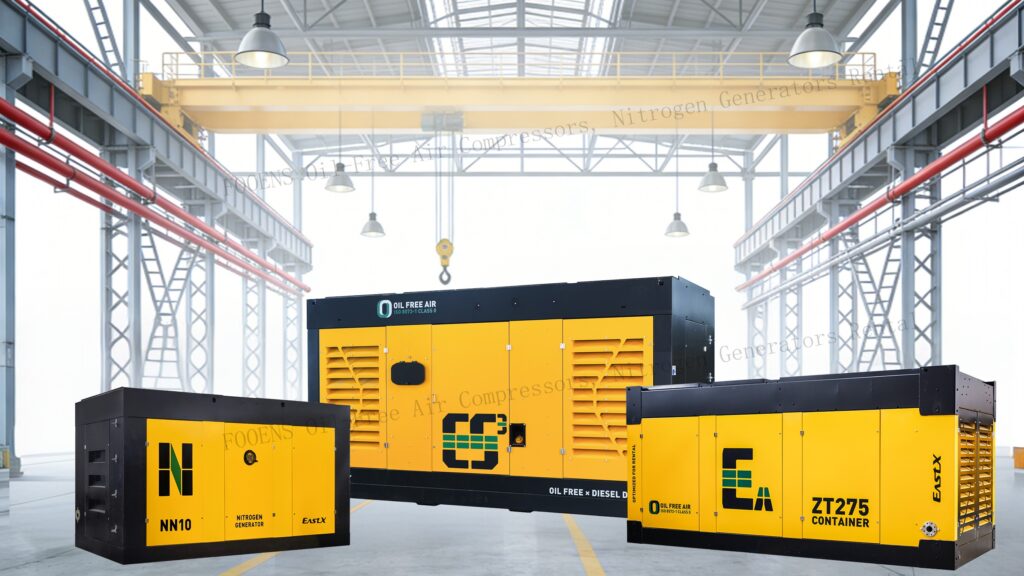
1. Why Nitrogen Generators Prefer Oil-Free Air Compressors
PSA nitrogen generators use carbon molecular sieves to adsorb oxygen. The microstructure of the sieve is highly sensitive to oil contamination. Once oil mist enters the adsorption tower, it coats the active surface. Adsorption efficiency decreases. Switching frequency changes. Nitrogen purity becomes unstable.
Membrane nitrogen generators also require clean air. Oil contamination can affect membrane structure and reduce separation efficiency.
According to ISO 8573-1, compressed air is classified by oil content. Many industrial nitrogen systems are designed to meet Class 0 or Class 1 air quality. An oil-free air compressor prevents lubricant from entering the compression chamber. This approach is more reliable than relying only on downstream filtration.
For this reason, selecting an oil-free air compressor is fundamentally about controlling air cleanliness.
2. Key Parameters When Selecting an Oil-Free Air Compressor
Selection should be based on operating data rather than assumptions. The following factors are critical:
**Air Flow Capacity**
The nitrogen generator nameplate specifies air consumption. For example, a 100 Nm³/h PSA unit typically operates at 85–95% load. The compressor capacity should cover the design requirement and allow about 10% margin. This prevents continuous full-load operation.
**Discharge Pressure**
Most PSA systems operate between 0.7 and 1.0 MPa inlet pressure. Insufficient pressure reduces adsorption performance. Excess pressure increases energy consumption. Compressor settings should match the nitrogen system design.
**Moisture and Temperature Control**
High discharge temperature increases the load on dryers. Moisture entering the adsorption tower competes with oxygen for adsorption sites. A complete air system includes an aftercooler, dryer, and high-efficiency filters.
**Energy Efficiency**
Compressed air is energy intensive. Specific power consumption is an important indicator. Proper selection of oil-free screw or oil-free centrifugal compressors helps control long-term operating cost.
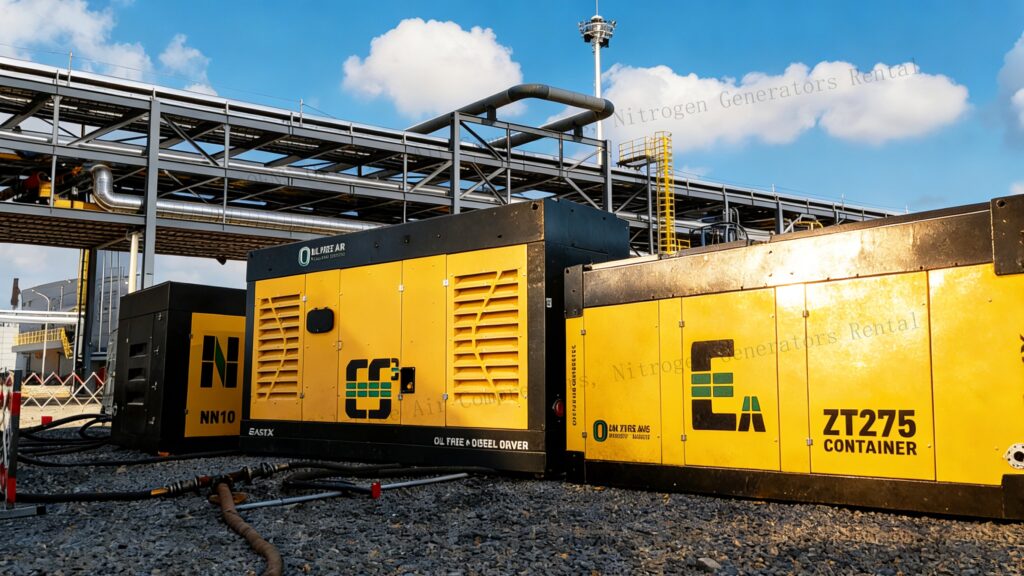
3. Oil-Lubricated vs. Oil-Free Compressors in Nitrogen Systems
Oil-lubricated compressors carry a risk of oil carryover. Even with filtration, trace contamination may occur. This can shorten molecular sieve life and increase maintenance frequency.
Oil-free compressors eliminate oil at the compression stage. This improves nitrogen purity stability and reduces system risk. For nitrogen generation, compressor choice is a system reliability decision rather than a simple equipment preference.
4. The Practical Value of Oil-Free Air Compressor Rental
Oil-Free Air Compressor Rental has become common in industrial operations. Many projects have temporary or variable air demand, such as plant maintenance, expansion testing, construction, or emergency backup.
Rental offers three main advantages:
* Reduced upfront capital investment
* Flexible adjustment based on project duration
* Technical support and faster deployment
For nitrogen systems, stable air supply is more important than equipment ownership. Rental allows companies to maintain air quality while optimizing financial efficiency.
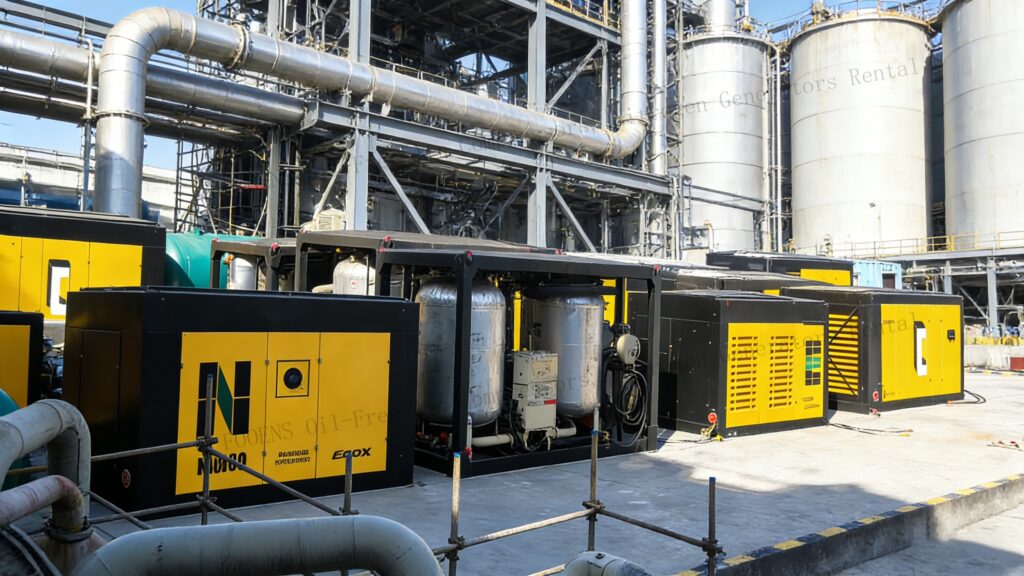
5. FOOENS Oil-Free Air Compressor Rental and Nitrogen Support Experience
FOOENS provides Oil-Free Air Compressor and nitrogen generator rental solutions for industrial applications. The fleet includes electric-driven and diesel-driven oil-free units, with integrated drying and filtration systems.
Typical implementation steps include:
1. Air demand calculation
2. Nitrogen generator parameter confirmation
3. Flow and pressure matching
4. Air treatment configuration
5. On-site commissioning and monitoring
Field experience shows that when air quality remains stable and oil-free, nitrogen purity fluctuations decrease and adsorbent replacement cycles become longer. A properly designed air supply system helps reduce long-term operating cost.
FOOENS supports projects in China and international markets, including regions in the Middle East, Central Asia, and Southeast Asia, with deployment experience in countries such as Vietnam and the United Arab Emirates.Selecting an oil-free air compressor for a nitrogen generator requires attention to air quality, parameter matching, and lifecycle cost. Oil-Free Air Compressor Rental provides a flexible solution for industrial operators. With proper technical planning and field execution, a stable and reliable air supply can support long-term nitrogen system performance.
 English