
On-site nitrogen generation has become the mainstream alternative to traditional bottled or liquid nitrogen supply. Among available solutions, PSA (Pressure Swing Adsorption) and membrane separation technologies dominate the market. However, they are not simple substitutes—each serves distinct industrial operating scenarios.
To help you make a clear and informed decision at this technical crossroads, this article provides an in-depth comparison of PSA and membrane nitrogen generation, covering working principles, performance characteristics, and economic considerations. It also explains how FOOENS nitrogen generator rental services enable rapid, low-risk deployment through a light-asset approach.
Ⅰ. Technology Principles Explained
1. PSA Nitrogen Generation
Working Principle:
PSA nitrogen generation is based on the selective adsorption characteristics of Carbon Molecular Sieve (CMS). Under operating pressures of 0.6–1.0 MPa, CMS preferentially adsorbs oxygen (kinetic diameter 3.46 Å), carbon dioxide (3.3 Å), and moisture, while nitrogen molecules (3.64 Å), with larger molecular size, pass through the adsorption bed and are collected as product gas.
Key Components:
Dual adsorption towers, precision valve assemblies, buffer tanks, and a PLC-based automatic control system.
2. Membrane Nitrogen Generation
Working Principle:
Membrane nitrogen generation utilizes the selective permeability of hollow fiber membrane materials. Oxygen, carbon dioxide, and water vapor permeate the membrane wall at higher rates and are vented, while nitrogen, with a lower permeation rate, remains inside the membrane fibers and is delivered as product gas.
Key Components:
Polymeric hollow fiber membrane bundles, inlet air pretreatment system, and pressure regulation units.
Ⅱ. Technical Performance Comparison
| Parameter | PSA Nitrogen | Membrane Nitrogen |
| Nitrogen Purity | 95–99.99% (High) ★ | 95–99.5% (Medium) |
| Energy Consumption | Medium to High | Low ★ |
| Response Time | Requires start-up | Instant start ★ |
| System Complexity | Higher | Lower ★ |
| Maintenance Cycle | CMS replacement every ~8,000 hours | Membrane replacement every 3–5 years |
| Suitable Applications | High purity, continuous, large flow | Medium purity, flexible, intermittent |
Ⅲ. Key Factors for Technology Selection
1. Purity Comes First: Defining the Technology Path
- Purity > 99.5%:
PSA nitrogen generation is the preferred solution. Its CMS adsorption process offers stable and reliable production of high and ultra-high purity nitrogen (up to 99.99%), making it ideal for precision manufacturing and high-end chemical industries. - Purity ≤ 99.5%:
Membrane nitrogen generation delivers clear cost advantages. Within this purity range, membrane systems provide lower energy consumption and operating costs, making them suitable for applications such as food preservation and tire inflation.
2. Matching Operating Conditions: Evaluating Economic Efficiency
- Continuous, stable, high-flow operation:
PSA systems offer better scalability and lower unit cost under full-load, long-term operation. - Intermittent, fluctuating, or energy-sensitive operation:
Membrane systems excel with instant start/stop capability and low power consumption, especially where gas demand is discontinuous or electricity costs are high.
Ⅳ. After Selection: How to Deploy the Optimal Solution
While the technical choice may be clear, purchasing nitrogen generation equipment still represents a significant capital investment and long-term maintenance commitment for many enterprises—particularly during technology validation stages, capacity fluctuations, or short-term projects.
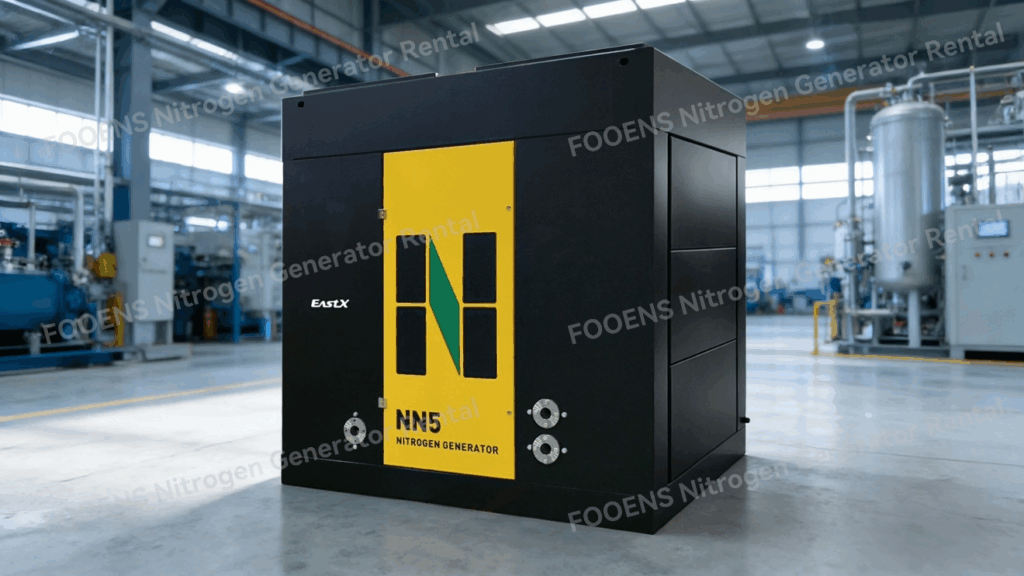
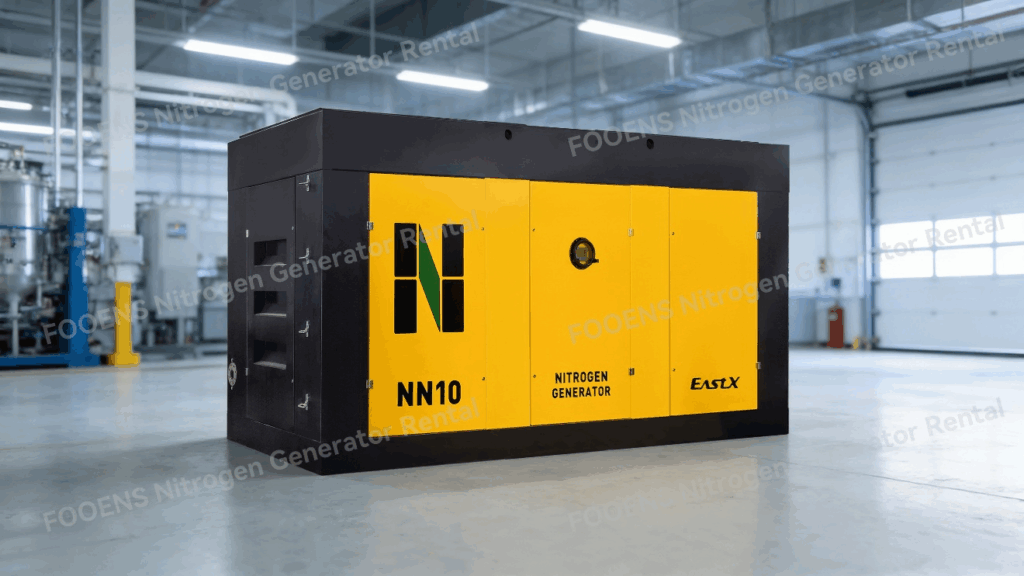
As an industrial gas solutions provider covering both PSA and membrane technologies, FOOENS offers on-demand on-site nitrogen generation rental services, transforming professional equipment into ready-to-use infrastructure and allowing you to bypass heavy investment barriers.
How Our Services Match Your Needs Precisely
1. Technology-Neutral, Customized Solutions
With a mature fleet of both PSA and membrane nitrogen generators, we objectively recommend the most suitable technology based on your required purity, flow rate, and operating conditions. Modular integration—including air compressors, dryers, and storage tanks—ensures rapid deployment.
2. Fast Response and Nationwide Dispatch
With regional hubs and service centers in major industrial areas such as Shandong and Guangdong, equipment can be dispatched locally, enabling response times as fast as 24 hours to meet urgent or temporary nitrogen demands.
3. Transparent Costs and Flexible Operations
No large upfront capital investment is required. Rental fees are based solely on actual usage duration, while maintenance, servicing, and spare parts are fully managed by our professional team. This truly delivers “Nitrogen as a Service”, converting fixed costs into variable costs and enhancing operational flexibility.
Conclusion: From “How to Choose” to “Ready to Use”
By this point, the selection logic between PSA and membrane nitrogen generation should be clear:
Purity defines direction, operating conditions determine economics, and lifecycle costs complete the evaluation.
More important than making a choice, however, is having the freedom to choose. When equipment ownership leads to heavy capital lock-in and maintenance burdens, rental provides a flexible alternative—delivering predictable costs, professional equipment, and full-service support.
Contact us today to receive your customized nitrogen solution.
 English