
In many industrial projects, oil-free air compressors are almost automatically regarded as the safer and more economical choice. As a result, a common assumption often follows:
If you buy an oil-free air compressor, it must be more cost-effective than renting.
This assumption is not necessarily wrong. However, the condition under which it holds true is often overlooked — whether the usage cycle is truly long-term and stable.
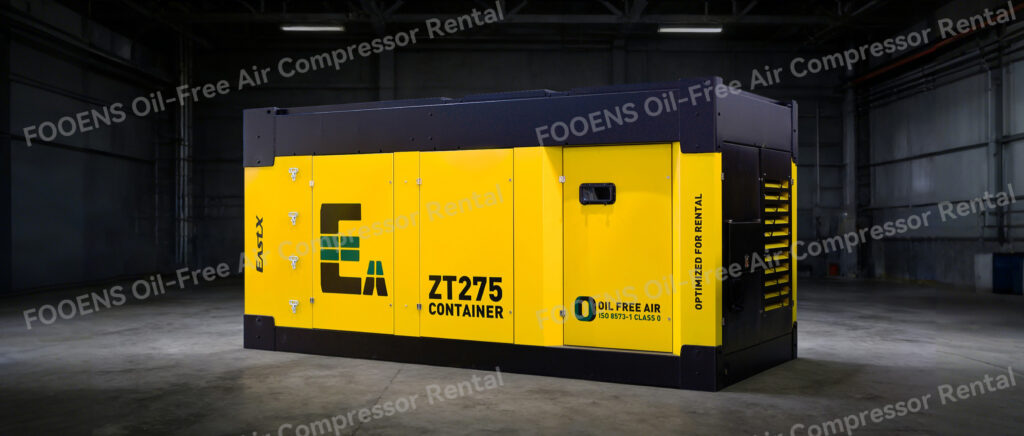
Ⅰ. Oil-Free Air Compressors Are Rarely Used Year-Round at Full Load
In real-world projects, oil-free air compressors are most commonly used during specific stages, such as:
- Temporary air supply during maintenance shutdowns
- Transitional air supply during capacity expansion or plant modifications
- High-requirement operation during trial production
- Temporary replacement when existing equipment is under maintenance or no longer sufficient
These scenarios share a common characteristic: air quality requirements are high, but usage cycles are uncertain and discontinuous.
When short-term demand is matched with a long-term asset, structural mismatches often occur.
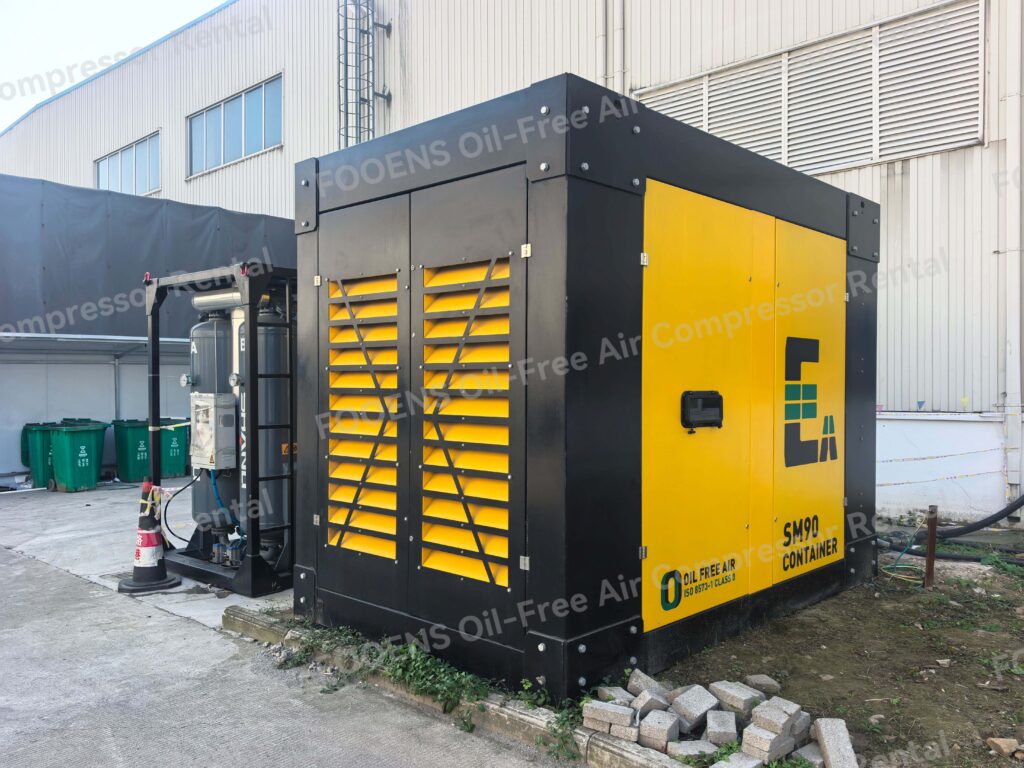
Ⅱ. The Most Overlooked Costs Are Not Listed in the Equipment Quotation
First, there is asset immobilization caused by low utilization rates. An air compressor only delivers real cost efficiency when it operates continuously and consistently.
Second, the impact of long-term shutdowns on the reliability of oil-free systems is frequently underestimated. Intermittent operation can, in fact, expose greater risks.
Finally, maintenance capability directly determines the final air quality. Oil-free does not mean maintenance-free — system management ultimately defines performance.
Ⅲ. Which Usage Cycles Are Better Suited to Rental Solutions?
From a usage perspective, the following scenarios prioritize outcome certainty rather than asset ownership:
- Short-term, high-load projects with clearly defined tasks
- Phased operating conditions such as expansion or trial runs
- Applications with extremely high requirements for continuous stability, but unclear duration
In these situations, the core question is no longer whether the equipment is owned, but rather:
At critical moments, is the system truly stable and controllable?
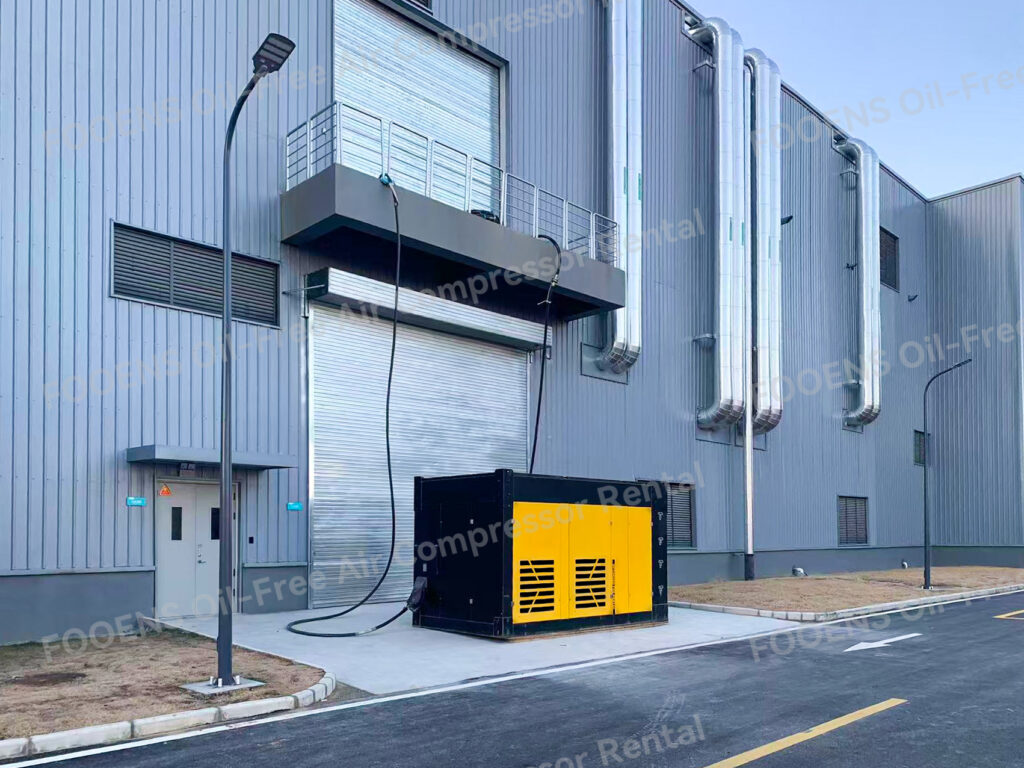
Conclusion | Equipment Is a Tool — The Usage Cycle Determines Cost
Rental is not a rejection of equipment procurement.
When loads are stable, usage cycles are clear, and in-house maintenance capabilities are mature, owning equipment remains an efficient option. However, during uncertain phases, using rental solutions to manage risk and control investment often aligns better with system-level rationality.Equipment is a tool. What truly determines cost efficiency is the usage cycle and the risk structure behind it.
 English